
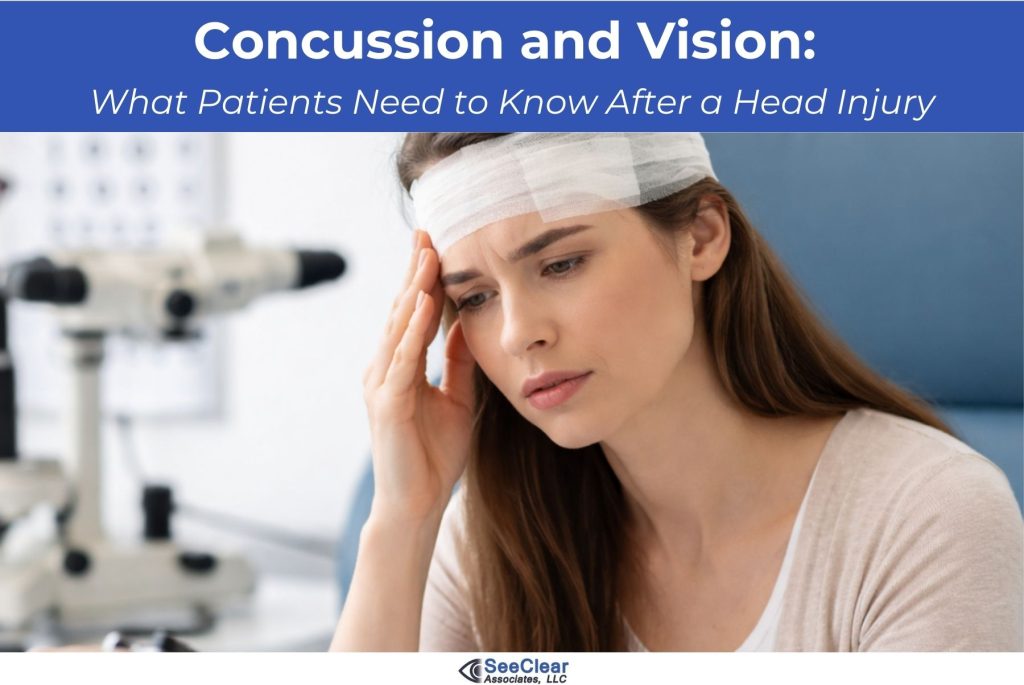
A concussion is a form of mild traumatic brain injury (mTBI) that can have far-reaching effects beyond headaches and dizziness. One of the most commonly overlooked consequences of a concussion involves vision and visual processing. Because more than half of the brain is involved in vision, even a mild head injury can disrupt how the eyes and brain work together.
At See Clear Associates, LLC, we specialize in identifying and treating post-concussion visual problems that may persist long after the initial injury. Understanding these issues is the first step toward effective recovery.
How Concussions Affect Vision
After a concussion, the brain may struggle to properly process visual information, even if the eyes themselves appear healthy. This disconnect can lead to symptoms that interfere with daily activities such as reading, working on a computer, driving, or participating in sports.
Many patients are surprised to learn that standard eye exams often do not detect post-concussion vision problems, which is why specialized optometric care is essential.
Common Post-Concussion Visual Issues
Patients recovering from a concussion may experience one or more of the following visual symptoms:
1. Blurred or Double Vision
Difficulty maintaining clear focus, especially during near tasks like reading or using digital devices.
2. Eye Tracking Problems
Trouble following moving objects or smoothly shifting focus between targets, which can affect reading fluency and coordination.
3. Light Sensitivity (Photophobia)
Increased discomfort in bright environments, often accompanied by headaches or eye strain.
4. Difficulty with Eye Teaming (Binocular Vision Dysfunction)
The eyes may struggle to work together efficiently, leading to fatigue, headaches, or double vision.
5. Visual Motion Sensitivity
Feeling dizzy or disoriented in busy environments such as grocery stores, crowds, or while driving.
6. Poor Visual Concentration
Difficulty sustaining attention during visually demanding tasks, impacting school, work, and daily life.
Why Specialized Optometric Care Matters
Post-concussion visual issues require more than a routine eye exam. At See Clear Associates, LLC, we perform comprehensive neuro-optometric evaluations that assess how the eyes, visual pathways, and brain function together.
Based on our findings, treatment may include:
- Vision therapy to retrain visual skills and brain-eye coordination
- Therapeutic lenses or prisms to reduce strain and improve comfort
- Filters or tints to manage light sensitivity
- Collaborative care with neurologists, physical therapists, and other healthcare providers
Early intervention can significantly improve recovery time and overall quality of life.
Who Should Be Evaluated After a Concussion?
You may benefit from a post-concussion vision evaluation if you or your child:
- Have ongoing symptoms weeks or months after a head injury
- Struggle with reading, learning, or screen use after a concussion
- Experience headaches, dizziness, or visual fatigue
- Have returned to sports or work but still feel “off” visually
Even if imaging tests are normal, visual dysfunction can still be present.
Comprehensive Q&A: Concussion and Vision
Q: Can vision problems occur even if my eyesight was normal before the concussion?
A: Yes. Post-concussion vision problems are related to how the brain processes visual information, not just eyesight clarity.
Q: How long do post-concussion visual symptoms last?
A: Symptoms can resolve within weeks for some patients, but others may experience issues for months or longer without proper treatment.
Q: Will glasses alone fix post-concussion vision problems?
A: In some cases, specialized lenses help, but many patients require vision therapy to fully address underlying visual processing issues.
Q: Is vision therapy safe after a concussion?
A: Yes. Vision therapy is customized, progressive, and designed to support neurological recovery safely.
Q: Do children and teens experience visual issues differently than adults?
A: Children may have difficulty articulating symptoms, which can lead to academic or behavioral changes. Early evaluation is especially important for young patients.
Q: Can untreated vision problems slow concussion recovery?
A: Absolutely. Unaddressed visual dysfunction can prolong symptoms such as headaches, fatigue, and difficulty concentrating.
Supporting Your Recovery
Recovering from a concussion is not just about rest—it’s about identifying and treating all contributing factors. Vision plays a critical role in balance, learning, and daily function, and addressing visual issues can be a turning point in recovery.
If you or a loved one is struggling after a head injury, a comprehensive vision evaluation may provide the answers you’ve been searching for.
Contact Information
See Clear Associates, LLC
📍 1811 Springfield Ave #1
New Providence, NJ 07974
📞 Phone: (908) 277-3116
🌐 Website: seeclearassociates.com
- Request an Appointment:
https://seeclearassociates.com/appointments/ - Patient Portal:
https://www.crystalpm.com/PatientPortal.jsp?crystalpmid=2543