
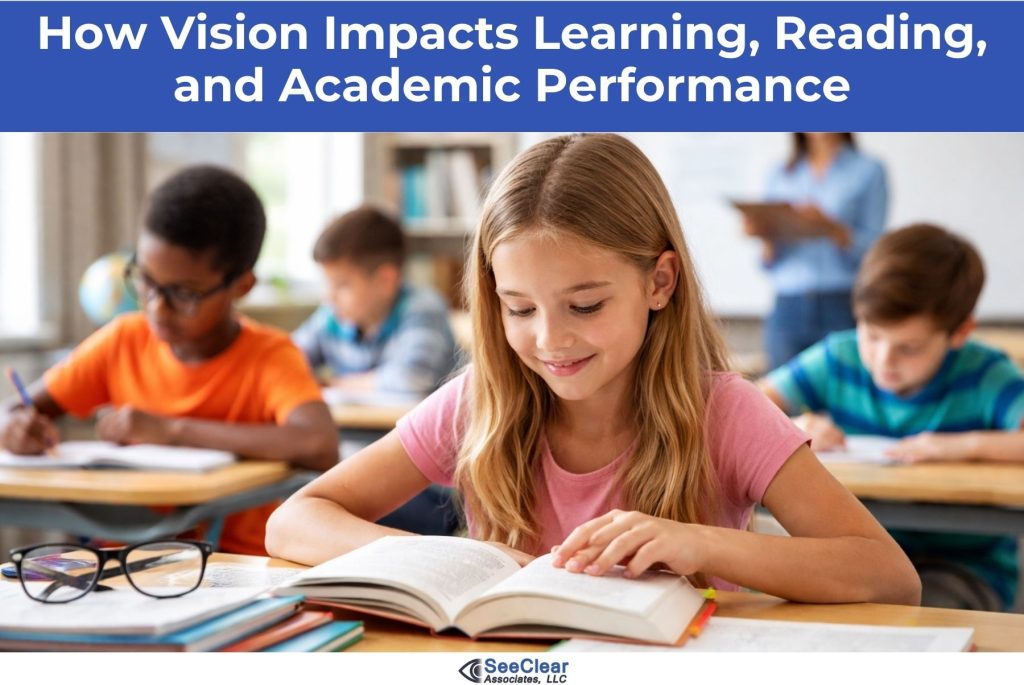
Success in school depends on far more than intelligence or effort alone. One of the most overlooked factors in academic performance is vision—not just how clearly a child can see, but how efficiently their visual system processes information. At See Clear Associates, LLC, we help children, teens, and adults understand the powerful role vision plays in learning, attention, and classroom success.
The Role of Vision in Learning
Approximately 80% of classroom learning is visual. Students rely on their eyes to read, write, follow along on the board, use digital devices, and coordinate hand-eye movements. When the visual system is not working efficiently, learning can become frustrating, exhausting, and ineffective—even if eyesight appears “normal” on a standard vision screening.
Vision is not just about clarity. It also includes:
- Eye teaming (how well the eyes work together)
- Eye tracking (following words smoothly while reading)
- Focusing ability (shifting focus from near to far)
- Visual processing (how the brain interprets what the eyes see)
When any of these skills are underdeveloped, academic performance may suffer.
Visual Processing and Academic Success
Visual processing refers to how the brain makes sense of visual information. A student may see letters clearly, but still struggle to:
- Recognize words quickly
- Understand what they read
- Copy information accurately
- Remember what they’ve seen
Common signs of visual processing difficulties include:
- Reversing letters or numbers
- Losing place while reading
- Slow reading speed
- Poor reading comprehension
- Difficulty with spelling or math alignment
These challenges are often misinterpreted as learning disabilities or attention issues when vision is a contributing factor.
Vision, Attention, and Classroom Behavior
When visual tasks are difficult, students often appear distracted or inattentive. In reality, their visual system may be working overtime just to keep up. This can lead to:
- Short attention spans
- Avoidance of reading or homework
- Frequent headaches or eye strain
- Fatigue during schoolwork
- Behavioral challenges in the classroom
A comprehensive eye examination can identify whether visual inefficiencies are contributing to attention or focus concerns.
Reading Challenges and Vision
Reading is one of the most visually demanding tasks students face. It requires precise eye coordination, sustained focus, and efficient visual processing. Vision-related reading difficulties may present as:
- Skipping lines or words
- Rereading the same lines
- Using a finger to track text
- Complaints of blurred or double vision
- Slow or labored reading
Identifying and addressing these issues early can dramatically improve confidence, comprehension, and academic outcomes.
The Importance of Comprehensive Eye Exams
School vision screenings often only check distance eyesight. They do not evaluate how well the eyes work together or how the brain processes visual information. At See Clear Associates, LLC, our comprehensive eye exams go beyond basic screenings to assess the full visual system.
Early detection and treatment can:
- Improve reading efficiency
- Enhance attention and focus
- Reduce academic frustration
- Support overall learning development
Frequently Asked Questions (Q&A)
Q: Can a child have perfect eyesight and still have vision problems?
Yes. A child may see 20/20 on an eye chart but still struggle with eye coordination, focusing, or visual processing skills that impact learning.
Q: How do vision problems affect reading comprehension?
If a student must concentrate on keeping words clear or tracking lines, less mental energy is available for understanding and remembering what they read.
Q: Are vision problems sometimes mistaken for ADHD or learning disabilities?
Yes. Visual inefficiencies can mimic symptoms of attention disorders or learning challenges. A comprehensive eye exam can help determine whether vision is a contributing factor.
Q: At what age should children have their eyes examined?
Children should have their eyes examined before starting school and regularly thereafter, especially if academic or reading concerns arise.
Q: Can vision issues affect adults in school or the workplace?
Absolutely. College students and adults may experience eye strain, headaches, reduced concentration, and decreased productivity due to undiagnosed vision problems.
Q: What should parents watch for at home?
Warning signs include avoiding reading, frequent headaches, rubbing eyes, short attention span, or frustration with schoolwork.
Supporting Academic Success Through Better Vision
Clear, efficient vision supports confidence, learning, and long-term academic success. Whether a child is struggling in school or an adult is experiencing visual fatigue, proper eye care can make a meaningful difference.
At See Clear Associates, LLC, we are committed to helping patients of all ages achieve optimal visual performance for learning, reading, and everyday life.
Contact Information
See Clear Associates, LLC
1811 Springfield Ave #1
New Providence, NJ 07974
📞 Phone: (908) 277-3116
🌐 Website: https://seeclearassociates.com
Request an Appointment:
👉 https://seeclearassociates.com/appointments/
Patient Portal:
👉https://www.crystalpm.com/PatientPortal.jsp?crystalpmid=2543